Parking King
mobirixRacing
4.33.24K Reviews
- Version
- 1.0.36
- Installs
- 10.00M
- Age Rating
- Everyone
Screenshots
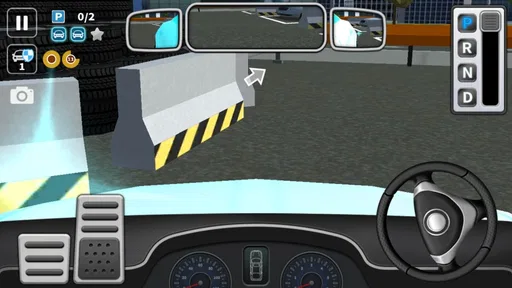
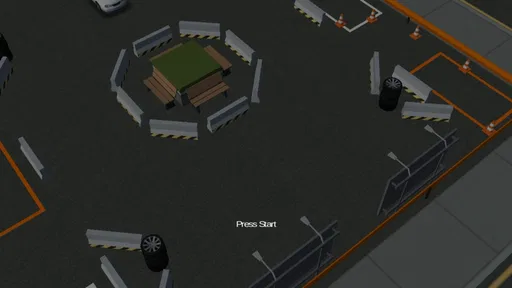
Our Review of Parking King
 Analysis by Appyee
Parking King is the kind of racing game I open when I want a short driving challenge rather than a full race with several opponents. Its focus is simple: control a car carefully and complete parking-focused tasks. That narrow idea gives it a clear identity, but it also means your enjoyment depends on whether you like precision, repetition, and gradual improvement more than speed alone.
I spent time with it as a casual mobile game and found that its appeal comes from turning ordinary driving actions into small tests of control. You are not simply holding the accelerator and watching scenery pass. You need to judge space, adjust your approach, and recover when a turn goes wrong. For players who enjoy getting a clean result after a few attempts, that can be surprisingly satisfying.
Developed by mobirix, this free racing title has built a sizeable audience, with an average rating of 4.3 from around 123 thousand ratings and more than 10 million installs. Those figures suggest that the straightforward driving concept has reached well beyond a niche audience. It is rated Everyone, so it is also an easy game to consider for younger players, families, or anyone looking for a light driving experience without a mature theme.
How the early goals turn parking into a game
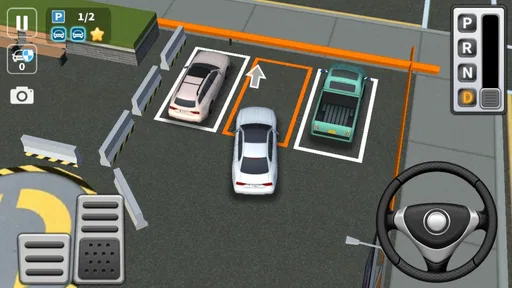
The first useful thing about Parking King is that its objective is immediately understandable. You do not need to learn a complicated racing setup before the game becomes playable. The early goals are built around getting the car into the correct place, and that gives each attempt a practical purpose. I always knew what I was trying to do, even when my steering made the task harder than expected.
That clarity matters on a phone. Many racing games begin with menus, car choices, upgrades, and several modes competing for attention. Here, the parking premise gives the experience a tighter loop. Start a task, read the space, move the car, and see whether your positioning is good enough. The satisfaction is modest but direct: a successful maneuver feels earned because small errors in angle or distance can spoil the result.
The game works especially well for short sessions. I can imagine playing it while waiting for an appointment or taking a quick break, because the basic activity does not demand a long commitment. A fast arcade racer may be more exciting for a few minutes, but it can also leave me wanting to continue until a race ends. Parking challenges are easier to pause mentally between attempts.
One practical tip is to treat the opening attempts as observation rather than failure. Instead of immediately trying to finish as quickly as possible, I pay attention to how much room the car needs to turn and how early I should begin correcting the steering. That approach makes later attempts more controlled. The game rewards patience more than frantic input, which is an important distinction for anyone coming from traditional racing games.
The early stage also establishes whether the concept suits you. If you enjoy lining up a vehicle and making careful adjustments, the simple goals can become a pleasant routine. If you mainly want overtakes, drifting, traffic battles, or high-speed competition, the same simplicity may feel restrictive. Parking King does not need to imitate a large console-style racer to work, but it asks you to appreciate precision as the main form of action.
What progress feels like during ordinary play
Progress in this type of game is felt through improved control as much as through visible advancement. At the beginning, I tend to focus on the destination and react too late when the car is badly aligned. After several attempts, I start planning the approach earlier. I enter the space with a better angle, leave more room for correction, and use smaller movements instead of constantly fighting the car.
That learning process is one of the strongest reasons to keep playing. The game can make a familiar action feel more deliberate, and the player notices improvement without needing a dramatic reward every time. A maneuver that seemed awkward during the first session becomes routine later. This is a good example of progression created by player skill rather than by a complicated collection of systems.
There is also a useful difference between finishing a task and finishing it comfortably. A barely successful parking attempt may show that the objective is possible, but it does not necessarily mean the route was efficient or the positioning was clean. I found myself replaying certain situations simply to find a smoother approach. That extra self-imposed target gives the basic activity more depth than the short description suggests.
For new players, I recommend separating steering corrections into small stages. First decide where the front of the car needs to point, then think about the rear and the available space. Trying to solve the entire maneuver with one long movement usually creates overcorrection. This is a simple habit, but it makes the game feel less random and helps explain why an attempt went wrong.
The progress signals are therefore subtle. They come from completing more difficult-looking parking situations, making fewer corrections, and understanding the car’s movement better. Players who expect a constant stream of new spectacle may find that underwhelming. Players who like mastery loops may appreciate that the challenge is visible in their own hands.
The difficulty curve rewards care, not speed
Parking games naturally create difficulty through space and positioning rather than through raw velocity. In my experience, the challenge rises when there is less room to correct a mistake or when the initial approach is less forgiving. That makes the difficulty curve feel more personal than in a standard race: the same car movement can be easy when planned well and frustrating when started from a poor angle.
The important adjustment is learning not to rush the first part of a maneuver. I used to think the fastest route toward the parking area would be the best route, but that often left me with an awkward final turn. A slower entry can create a much easier finish. This is one of the game’s more interesting trade-offs: speed may save a few seconds, while control saves the entire attempt.
That pacing gives the game a calmer rhythm than most racing alternatives. A conventional arcade racer usually asks for immediate reactions, and a simulation-oriented driving game may bury the player in realistic controls or lengthy sessions. Parking King sits between those approaches. It keeps the idea accessible, but the player still has to respect space and timing.
It is worth playing with a light touch. Repeatedly making large steering movements can turn a manageable situation into a series of corrections. I get better results when I make one adjustment, observe the new alignment, and then decide whether another is necessary. This method is particularly useful on a touchscreen, where input can feel less precise than a physical controller.
The limitation is that careful play can become repetitive. Once the basic handling idea is familiar, the suspense depends heavily on how much variety the individual challenges provide. Someone looking for a broad racing career, dramatic competition, or a deep vehicle-tuning experience should choose a different game. This one is strongest when the act of solving a parking situation is itself enough to hold attention.
Where the challenge remains engaging and where it may slow down
The most enjoyable sessions are the ones in which I fail for a clear reason. If I approach too sharply, leave too little turning space, or correct too late, I understand what to change. That creates a useful retry loop. The next attempt is not just a random restart; it is an experiment based on what I learned.
That loop can sustain play for a while, especially for people who like completing small goals in sequence. The game’s pacing is easy to fit around daily routines because each challenge has a natural stopping point. I can play for a few minutes, put the phone away, and return later without needing to remember a complicated story or a large strategic plan.
However, the same structure can lose momentum if the player does not care about refining technique. Once a task has been completed, replaying it may not feel worthwhile unless the player enjoys cleaner execution or wants to improve consistency. This is where Parking King differs from games that constantly introduce new opponents, environments, or dramatic events. Its retention depends more on personal satisfaction than on spectacle.
I also think the game is better suited to focused play than distracted play. A quick glance while multitasking is likely to produce unnecessary mistakes, because parking requires attention to position. If I am tired or impatient, the game feels harder than it really is. When I give each attempt a few seconds of concentration, the controls and objectives make much more sense.
For an everyday example, I would use it during a short commute break or while waiting for food, but not while walking or doing something that already demands visual attention. The game is casual in length, not necessarily mindless in execution. That distinction helps set the right expectation: it is easy to start, but good results still require concentration.
Free access, optional spending, and the feel of retention
Parking King is free to download, which makes trying its driving style fairly low-risk. The game also includes in-app purchases ranging from $2.99 to $99.99 per item. That range is important for budgeting. I would approach the game as a free casual experience first and decide later whether any optional purchase genuinely improves my enjoyment.
The presence of purchases can affect how comfortable the progression feels, depending on how they appear during play. Even when a game is enjoyable without spending, repeated prompts or pressure can interrupt the calm rhythm that makes parking challenges appealing. My advice is to avoid treating every available purchase as part of the intended route. The core test is whether the driving remains satisfying when played at its natural pace.
Retention pressure is most noticeable when a player starts chasing completion rather than simply enjoying the maneuver. The desire to unlock or advance can be motivating, but it can also make a small error feel more irritating than it should. I prefer setting a personal limit: play until I have solved a few situations well, then stop before retries turn into frustration.
Parents may also want to consider the difference between the Everyone content rating and purchase control. The rating makes the theme broadly accessible, but free-to-play games can still require sensible device settings if children use the phone. That is not unique to this title, yet it is relevant when a game is simple enough for younger players to pick up without much guidance.
The game’s retention is therefore not based solely on novelty. It comes from short goals, the wish to improve control, and the satisfaction of handling a tricky space more cleanly. That can be a healthy structure for casual play, but it will not satisfy players who need a strong narrative, competitive ranking, or constant rewards to stay interested.
Device compatibility and what to expect from the current release
The current version is 1.0.36, and the game supports Android 7.0 or later. That gives it a relatively broad reach for people using older compatible Android devices. I would still judge the experience by the phone’s screen size and responsiveness, because precise parking is more comfortable when the display is easy to read and touch input feels dependable.
A smaller screen is not automatically a problem, but it can make judging distance less comfortable during tight maneuvers. On a larger phone, I find it easier to watch both the car’s position and the available space around it. Players with older hardware should also keep expectations practical: this is a focused mobile game, not a reason to expect the visual scale or presentation of a major console racer.
Before installing, I would check the Android requirement and make sure there is enough free storage for the download and normal device operation. The game is free, so the main decision is less about an upfront price and more about whether its careful driving loop matches your taste. iPhone users should look for the appropriate iOS edition separately, since the compatibility detail noted here applies to Android.
Another useful expectation is that the game is designed around driving and parking rather than a realistic driving curriculum. It can help players become more attentive to angles and space in a game context, but I would not treat it as a substitute for real-world driving instruction. Its value is entertainment and hand-eye practice, not formal road training.
Who should play it, and who should choose another racer
I would recommend Parking King to players who like compact challenges, controlled movement, and the satisfaction of solving a spatial problem. It is a good fit for someone who finds ordinary racing too frantic but still wants a car-based game. It can also suit families looking for an accessible title with an Everyone rating and a clear objective that does not require learning a large rule set.
It is less suitable for players who want constant speed, realistic traffic behavior, open-world exploration, or head-to-head racing. A conventional arcade racer will provide more excitement if your favorite moment is overtaking another car at the last second. A deeper driving simulator will be better if you want extensive vehicle settings and a strong emphasis on realism. Parking King earns its place by staying focused, not by covering every part of the racing category.
I would also skip it if repeated attempts feel like wasted time to you. The game’s best moments come from adjusting your method and trying again. If you prefer games where every minute introduces a major new event, the measured pace may seem too narrow. On the other hand, if you enjoy turning a clumsy first attempt into a neat solution, the restrained design becomes an advantage.
My strongest practical recommendation is to play with a deliberate routine: inspect the space, choose an entry angle, make small corrections, and only then worry about finishing quickly. That workflow exposes the game’s real strength. It is not merely about reaching a marked place; it is about learning why one approach works better than another.
My progression verdict
Parking King sustains play through small goals and gradual control improvement rather than through a large promise of racing spectacle. The early objectives are easy to understand, the difficulty encourages patience, and the retry loop can feel rewarding when each mistake teaches something useful. Its pacing is especially comfortable for short sessions, although the focused format may become repetitive for players who need broader variety.
The free entry point makes it easy to test, while the in-app purchase range means I would keep spending decisions separate from the basic question of whether the parking challenges are fun. The Everyone rating and Android 7.0 minimum also make it approachable for a wide audience, provided the player enjoys careful touch control.
After playing it, I see this as a specialized casual racer rather than a replacement for every driving game. Its real strength is turning precision into a compact, repeatable challenge. When I want speed, competition, or a larger world, I would choose another option. When I want a focused task that rewards patience and gives me a clear reason to retry, this is a game I am happy to recommend.
Verdict
Strengths of Parking King
- Simple controls make parking challenges easy to learn.
- Short levels are convenient for quick gaming sessions.
- Increasing difficulty keeps the gameplay engaging over time.
- Different parking situations add variety to the experience.
- Offline play is useful when you have no internet connection.
Limitations of Parking King
- Repeated level layouts can make the game feel predictable.
- Precision challenges may become frustrating on smaller screens.
- Ads can interrupt play, depending on the version installed.
- Limited customization reduces long-term personalization options.
- The gameplay may feel too simple for experienced players.
Other Releases by mobirix
View All


Similar Picks in This Category
View All
Hill Climb Racing
Fingersoft4.3

Dr. Driving
SUD Inc.4.2

Traffic Rider
skgames4.5

Asphalt 8 - Car Racing Game
Gameloft SE4.6

Race Master 3D: Car Racing
Beresnev Games4.6

Extreme Car Driving Simulator
AxesInMotion Racing4.3
Frequently Asked Questions
What is Parking King and how does the gameplay work?
Parking King is a casual driving and parking game focused on maneuvering vehicles into marked spaces without hitting obstacles or other cars. From my experience, the game combines short parking challenges with increasingly tighter routes, turns, barriers, and traffic situations. Each level generally rewards careful steering, controlled speed, and accurate positioning rather than simply reaching the finish as quickly as possible.
Is Parking King free to download and play?
Parking King can generally be downloaded and played without an upfront purchase, although the exact monetization may depend on the version available for your Android or iOS device. Players should expect possible advertisements, optional in-app purchases, or extra content that may require payment. Before installing, it is worth checking the store listing for current pricing, supported purchases, and any subscription details.
Does Parking King work offline?
Many of Parking King’s core parking levels can usually be played without a continuous internet connection, which makes it suitable for short sessions while traveling or when mobile data is unavailable. However, an internet connection may still be needed for advertisements, online features, updates, cloud services, or restoring purchases. Availability can vary by version, so test the game after installation if offline play is important.
Is Parking King suitable for children and beginners?
Parking King is relatively easy to understand because its main objective is straightforward: control the vehicle and park it correctly. Beginners can learn the steering and braking mechanics through the early levels, while later stages may require more patience and precision. Parents should still review the game’s age rating, advertising, and in-app purchase settings before allowing children to play unsupervised.
What should I know about controls, difficulty, and device performance?
The game is designed around touch controls, but the exact options may include steering buttons, a virtual wheel, or other control layouts depending on the release. Parking accurately can take practice, especially when levels become narrow or introduce moving obstacles. Performance should be acceptable on many modern phones, although older devices may experience slower loading, reduced graphics quality, or occasional interruptions.
Play our best games!


